

WP2 Workshop 3 – Kjeller, Norway

“Workshop 3 was an important point of convergence for WP2. We brought together the ethical and legal perspective, operational framework, scenarios and mission threads, CONOPS and stakeholder requirements into a much more coherent picture of how iMUGS2 should actually be employed. We are moving from discussing what unmanned systems can technically do towards defining what military users need them to achieve, under which operational conditions, and why. This provides a strong operational foundation for the system design, integration, demonstrations and ultimately the final trial,” said Sami Laaksonen, WP2 Lead Engineer from Milrem Robotics.
The Norwegian Defence Research Establishment (FFI) hosted the third workshop in Work Package 2 of the iMUGS2 programme. The 3-day workshop was held in Kjeller, 20 km east of Oslo. The intensive programme brought together the different strands of WP2 concept development and included a site visit supporting preparations for the project’s future demonstration and final trial.
During the first day, discussions focused, among other topics, on the “Ethical, Legal, Societal Aspects & Regulations of LandOps with UAS”, addressing the conditions for responsible development and employment of unmanned and autonomous systems. The operational framework was also presented, followed by a presentation on CONOPS.
A key part of the day was the discussion on stakeholder requirements. The session connected operational needs and high-level requirements with the scenarios and mission threads developed in WP2, helping establish a common operational baseline for subsequent system requirements and architecture work. The first day concluded with a consolidation of cross-work-package insights and agreement on the next steps.
The second day started with transport to a potential site for the project’s future demonstration and trial activities. Following the site visit, participants returned to Kjeller to discuss the operational conditions, practical considerations and preparations associated with the future events.
The third day started with work around the scenarios and their relationship with the project’s high-level requirements, stakeholder needs and mission threads. The discussions considered how these elements will provide the operational context for the demonstrations and final trial. The workshop ended in a plenary reporting and alignment session that also included discussion on the way ahead and planning for future work.
The workshop represented an important step in transforming the project’s high-level ambitions into an operationally grounded framework. WP2’s concepts, scenarios, mission threads and requirements will provide operational context for the technical development taking place across iMUGS2 and help maintain traceability between military needs and the capabilities eventually demonstrated by the project. This reflects the project’s requirements-driven SoS engineering approach, in which stakeholder needs and CONOPS inform subsequent requirements, architecture and development.
“The workshop was helpful for FFI for understanding how the scenarios in the project will influence the final demonstration and trial in Norway in 2028. The scenarios and mission threads developed in the iMUGS2 project give FFI new perspectives for the national efforts to create a Norwegian concept for the use of unmanned systems,” said Kim Mathiassen from FFI.
Interview with Human Factors engineer working at TNO
Jan Maarten
Q1: Tell us about yourself, Jan Maarten
I am a Human Factors engineer working at TNO in The Netherlands on the intersection of humans interacting with technology in demanding environments. I have a master’s and a PhD degree in Cognitive Psychology. I live together with my wife in a small village near the forests of Utrecht in the middle of The Netherlands. We have three daughters who are all living by themselves. I like to read novels, watch movies and walk in the forest. I also collect and maintain a few classic cars.
Q2: Tell us about your role in the iMUGS2 programme
My role in the iMUGS2 programme is that of Work Package Lead for Work Package 2, Concept Development. That means organizing and distributing the work across the various partners, keeping track of progress, coordinating with MODs and military subject matter experts attending the WP2 Workshops hosted by different partners, coordinating with other Work Packages, and making sure Deliverables are finished in time and with the required quality.
Q3: Tell us about TNO and its role in the programme
TNO (Netherlands Organization for Applied Scientific Research) was established by law in 1932 with the aim to act as a bridge between academia and industry. Currently, TNO’s mission is to create impactful innovations for the sustainable well-being and prosperity of society. TNO plays a multifaceted role within the Dutch ecosystem. We innovate, investigate, and orchestrate, collaborating closely with governments, universities and the private sector. By building national and international consortia and ecosystems, we drive technological and methodological breakthroughs that help to realize a secure, sustainable, healthy, and digital society, and strengthen the earning power of the Dutch economy.
Within iMUGS2, TNO leads in WP2 the efforts in ELSA (Ethical, Legal, Societal Aspects) and Operational Scenarios and contributes to Mission Scenarios, Mission Threads, and Stakeholder Requirements and contributes to Collaborative Behaviour (Man-Unmanned Teaming concepts). Furthermore, TNO is especially active in WP3 Technology studies, WP4 Through Life Capability Management, WP6 System, Modules and Technology development and finally in the Test, Evaluation, Verification and Validation procedures during the demonstrations and final 72 hour trial. iMUGS2 is considered an important project within TNO.
Q4: What are your expectations from the programme as WP2 lead? How would you describe success and good outcomes at the end of the programme from your perspective?
The Concept Development Work Package was one of the first to start within the programme. It runs for a year, and by month 7, we need to deliver to the other Work Packages the operational requirements. To this end, the High Level Requirements that were formulated by the participating Member States before the start of the programme need to be mapped into generic stakeholder needs. This is based on the needs of operators, owners and maintainers. An important task within WP2 is the startup of involving military subject-matter experts so the end product benefits as much as possible from their input. I would be very pleased as WP2 lead if the 72-hour field trial at the end would have benefited from our scenarios, concept of operations, performance metrics and measurement methods, and the Norwegian Army can work with the developed system smoothly.
The iMUGS2 project aims to develop an unmanned ground system capable of manned-unmanned and unmanned-unmanned teaming with other robotic unmanned platforms and manned infantry vehicles to provide them full battlefield support.
iMUGS2 advances European security through robust industrial collaboration across the continent. The project will facilitate the development of a standardized open architecture, ensuring interoperability and seamless integration of defence solutions among member states. Leveraging cutting-edge European technology and expertise in combination with the utilization of other ongoing EU projects, iMUGS2 will strengthen the European defence industrial base, enhancing strategic autonomy and reducing dependency on non-European technologies.
iMUGS2 Interview
Petri Suurnäkki
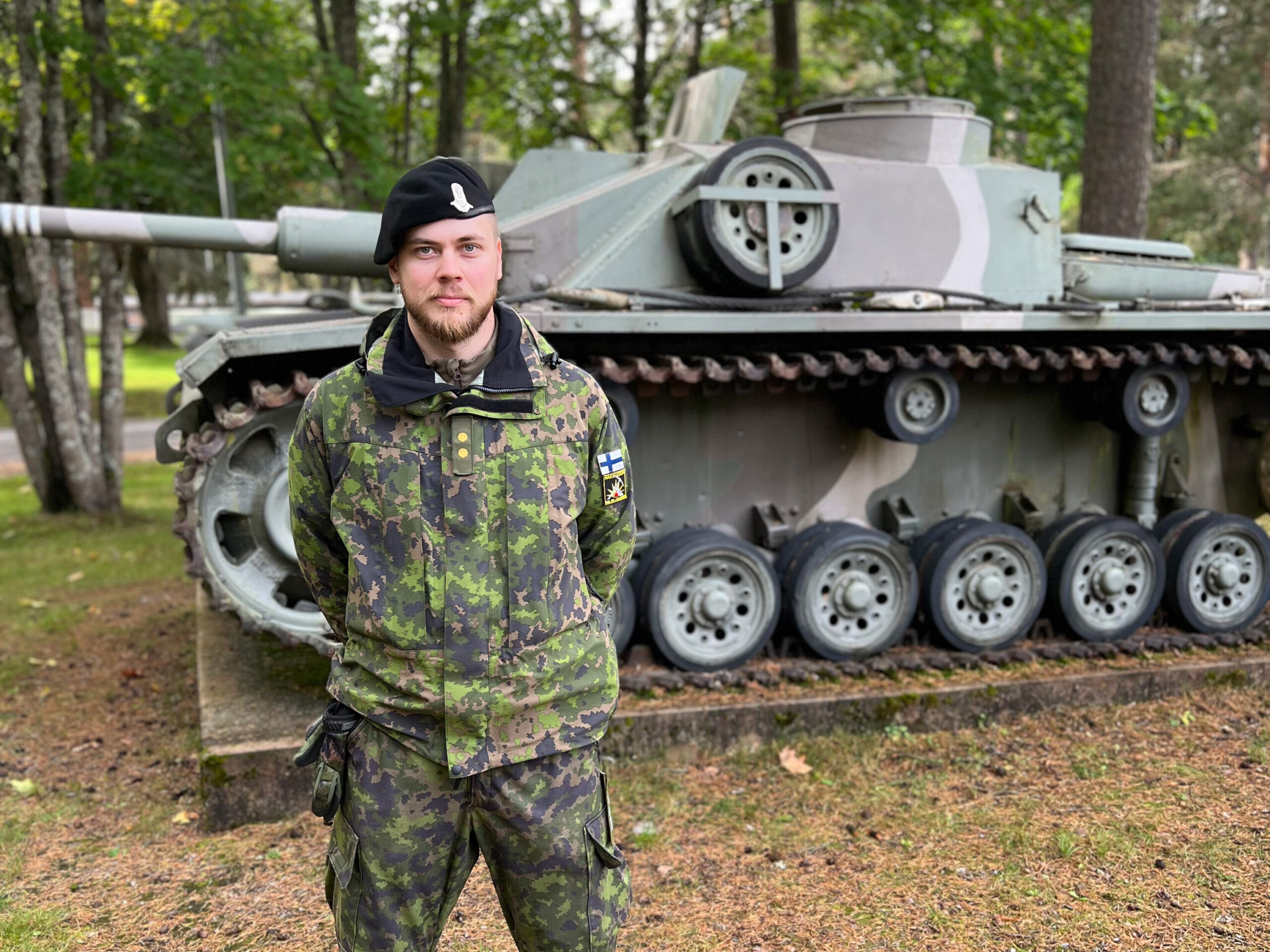
For our first feature interview we talked to Petri Suurnäkki, Consortium Technical Lead.
Q1: Tell us about yourself Petri
“I’m a systems architect at Milrem Robotics, and I live in Finland with my partner, our two young boys and two Icelandic sheepdogs. I have two Master’s Degrees and am currently working on my Doctoral Degree in applied aerodynamics. I’m an active reservist in the Finnish Defence Forces and currently responsible for running multiple interdisciplinary military skills courses. By rank, I was recently promoted to Senior Lieutenant. As I happen to live walking distance from a shooting range, my hobbies include international military shooting, precision rifle shooting and heritage rifle shooting. Additionally, I enjoy running and cycling and possess amateur radio permits.
Q2: Tell us about your role in the iMUGS2 programme
I’m the lead for the full technical context of the programme, and in charge of the architecture development. This means that I steer technical decisions, trade-offs and monitor readiness and demo/trial prerequisites. In cooperation with the other programme key managers, I make sure we align all actors and actions towards the common intent of the programme, i.e. to lead the development of joint European reference architecture to serve as the basis for European unmanned capabilities.
Q3: You were also a member of the initial iMUGS programme. How would you describe the central relations and developments between the two programmes?
The biggest difference is of course the size of iMUGS2. While bigger is not always better, we have been able to build a strong and unified consortium and avoid unnecessary silos. This is crucial in getting all members to work together.
Another difference is in the buildup: we didn’t need to start from scratch, and we are therefore able to use funds into more meaningful developments. A baseline for an architecture already exists, we just need to evolve it to today’s standards and the changing environment. We also have the possibility to iterate and maintain good solutions and re-evaluate others. Due to the geopolitical situation around us, I feel that we have a stronger common understanding of the importance of the programme and have been able to increase the amount cooperation across consortium members. There’s a feeling that both the Commission and the participating Member States agree on the importance of the programme in a significantly different way than before. At the end of iMUGS2 I hope to see procurements underway utilizing some or all parts of the reference architecture we developed. I also hope to see the CONOPS being utilized by some countries or the reference architecture being promoted by them.
Q4: What are the main goals of the iMUGS2 programme and why is it so important right now?
First of all, the goal is to strengthen European defence capability and to build strong deterrence. There is a war on the European continent and now also another one raging close to us in the Middle East. Europe needs to build a strong deterrence for itself. Deterrence is not about looking for a fight. It is about making sure that the fight never begins. Because if it does, it is our soldiers who will carry that burden. Many of them will not come home. This issue is really close to me as my grandfather was a veteran of the Continuation War at the age of 18 and my grandmother was an evacuee from Karelian Isthmus.
Our ambition is clear; if we ever have to fight, we want robots at the front, and humans coming home. To achieve this deterrence, we must rearm smartly and modernize. Unmanned systems must become the spearhead. They see first, move first and take the first risks, so that our people don’t have to. This is not science fiction. It is capability development: technology and force design.
The concept is simple: Put unmanned systems at the leading edge. Do reconnaissance, breaching, logistics and the first contact. Keep humans in the decision loop, but further away from danger. Use manned teams where we need judgment and authority; use machines to absorb danger and extend reach. iMUGS2 aims to develop the operational concept and capability description for the member states on how to achieve and adapt this capability framework into their own defence forces and doctrines. Our consortium brings together the best of European defence industry and research organisations to achieve this goal.
Our second main goal is to create a reference architecture and a procurement framework for the member states. We need interoperability and common solution architecture across the participating Member States’ Defence Forces, supporting multinational operations and joint missions. In simple terms, we’re creating the framework for a jigsaw puzzle on how to best and most efficiently procure, utilize and adopt unmanned assets in the member states. Every piece doesn’t need to look the same in each member state, but the framework for the puzzle is the same for everyone to integrate into their own commands. This will result in real interoperability. It is about building a framework and capabilities that Member States can take over, adopt, and grow into their national force structures.
Our third goal is to transition experimental UGS technology into a real-life and cost-effective SoS solution that delivers clear value in military operations and is ready for procurement and force integration by 2030. We will validate the different parts and aspects of the SoS through live exercises and demonstrations across various environments and conditions. All in all, we will deliver 3 demonstrations and a qualification trial in a military exercise, designed to validate readiness for procurement. In other words, iMUGS2 is about scaling up, connecting systems, and proving that what we build can be fielded by European armies. This readiness is at the essence of building a stronger Europe for current and future needs.
The Netherlands “Work Package 2” workshop
On February 16th-17th, TNO hosted one of the first major workshops of the iMUGS2 project, relating to the development of operational requirements, alongside a meeting of the Technical Steering Group (TSG). The Netherlands “Work Package 2” workshop was an important milestone — not only for WP2, but for the iMUGS2 consortium.
This workshop marked the transition from concept discussions to coordinated European-level operational structuring. It provided a concrete platform to present this thinking within a multinational context and connect it directly to the ongoing concept development activities. The consortium partners and subject matter experts (SMEs) from participating Member States had the opportunity to engage face-to-face, build mutual understanding, and align their perspectives.
This shared understanding is critical. It moves us from individual interpretations toward a genuinely common operational foundation. The consortium is now in a much stronger position to continue the mission engineering work and systematically translate scenarios into mission threads, requirements, and architectural implications.
Alongside the WP2 workshop, the Technical Steering Group gathered for the first time. The TSG’s governance role is to shape the work and support participants, collecting ideas on its future scope and ways of working, while keeping in mind the high ambition and extensive requirements set by the the Member States and Norway — developing, integrating, demonstrating, and validating solutions through final trials — toward the objective of developing a system ready to be integrated into various EU Member States armed forces by 2030.
Kicking off the next phase of future European ground robotics in chilly Oulu, Northern Finland.
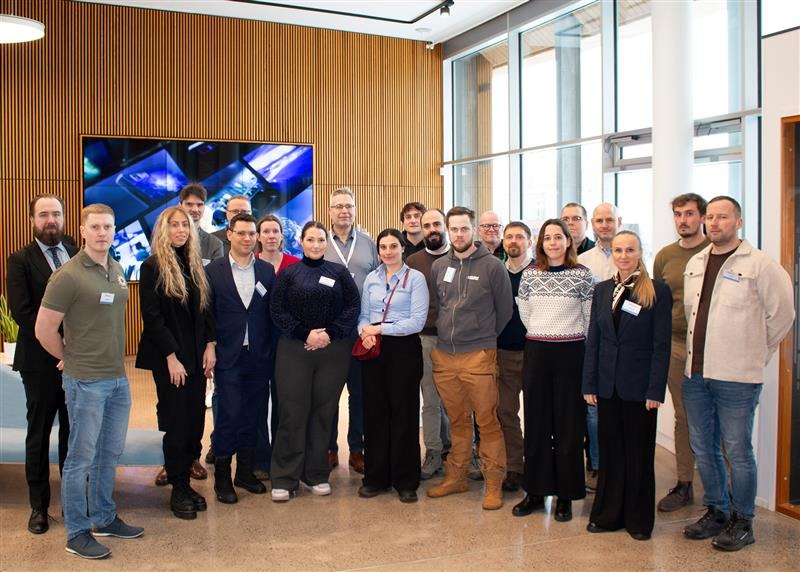
Bittium, a member of the programme core team and work package lead, hosted an iMUGS2 meeting in Oulu last week. We got together with some of our consortium members to kick-off the next activities for the development of future European ground robotics solutions. We are well off in laying out the steps to develop the future solutions for unmanned ground systems and enable European interoperability.
A huge thank you to Bittium for hosting the session and to all our consortium partners for the continued momentum and cooperation. Bittium leads the development of connectivity within the system of systems, creating a hybrid communications solution together with other partners. This cooperation is how we’re able to strengthen the European defence ecosystem through innovation. iMUGS2 is developing rapidly procurable common European solutions and a system of systems framework for unmanned ground systems from the Arctic to the Mediterranean.
Milrem Robotics was attending as the coordinator providing support for efficient cross-consortium cooperation across all partners and activities, including Safran, KNDS France, GMV, Insta, Latvijas Mobilais Telefons SIA, Talgen Cybersecurity, Cybernetica, Bureau Veritas Cybersecurity.
iMUGS2 is Europe’s largest development programme for ground robotics funded by the European Defence Fund. The programme connects 29 consortium members across 14 members states.
European Consortium Launches iMUGS2 to Advance Interoperable Unmanned Ground Systems
A European consortium uniting leading defence, research, and technology organisations from across the Union has launched the iMUGS2 project to develop the next generation of interoperable unmanned ground systems, following its successful proposal to the European Commission under its European Defence Fund (EDF) programme. The project is coordinated by Milrem Robotics.
Building on the achievements of the first iMUGS project, iMUGS2 aims to enhance Europe’s autonomy and robotics capabilities by developing a scalable, interoperable, and secure system-of-systems architecture for both unmanned and manned platforms. The project reinforces Europe’s technological sovereignty in key defence areas, including AI-driven autonomy, systems integration, communications, and command and control.
“With iMUGS2, Europe takes another significant step towards developing truly interoperable and scalable robotic forces that enhance the continent’s defence capabilities,” said Raul Rikk, Capability Development Director at Milrem Robotics. “The project promotes innovation and cooperation among European nations, ensuring that future AI-based autonomous systems can operate seamlessly together on the battlefield.”
iMUGS2 begins immediately with extensive conceptual, operational, and technical development across multiple domains. Partners will design and refine operational concepts, system architectures, and technological solutions that advance manned–unmanned teaming, autonomous functions, secure communications, and electronic protection.
In parallel, the project focuses on system integration, lifecycle efficiency, and interoperability, laying the groundwork for upcoming demonstrations and capability deployment across Europe’s defence landscape. These developments will ensure resilient, cost-effective, and future-ready unmanned systems.
About iMUGS2
With a total value of approximately €55 million and nearly €50 million in EDF funding, iMUGS2 pursues three strategic objectives: to develop and demonstrate combat-ready unmanned ground systems that support dismounted troops; to define operational concepts showing how unmanned ground and aerial systems can improve infantry battalion operations and cross-domain cooperation; and to advance modular, open architectures and lifecycle management frameworks that ensure interoperability across both legacy and future platforms.
About the Consortium:
The iMUGS2 Consortium comprises 29 partners from 15 European Union member states. The group includes large corporations, mid-sized businesses, SMEs, and research organisations. Each partner provides leading expertise in their respective fields, supporting a comprehensive vision throughout the project’s lifecycle. This diversity allows the consortium to tackle potential challenges and deliver strategic, effective solutions.
The iMUGS2 Consortium includes the following entities: AVL List, Bittium Wireless, Bureau Veritas, Czech Technical University in Prague, Cybernetica, Delft Dynamics, Diehl Defence, dotOcean, Elettronica, Escribano Mechanical and Engineering, FN Herstal, GMV, Huta Stalowa Wola, Insta Advance, Integrated Systems Development, John Cockerill Defense, Kepla, KNDS France, KNDS Germany, Kongsberg Defence & Aerospace, Latvijas Mobilais Telefons, Łukasiewicz – PIAP, Milrem Robotics (project coordinator), Nortal (Talgen Cybersecurity), Norwegian Defence Research Establishment, the Royal Military Academy of Belgium, Safran Electronics & Defense, Svensk Konstruktionstjänst and TNO.
Information contained here reflects only the author’s view and the Commission is not responsible for any use that may be made of the information contained here.